A cancer diagnosis can lead to many questions, but one of the most important is: Who decides which treatment is right for me?
Cancer treatment is rarely based on the opinion of just one specialist. Depending on the type, stage and characteristics of the cancer, a patient may need surgery, chemotherapy, radiation therapy, immunotherapy, targeted therapy or a combination of treatments.
This is why multidisciplinary cancer care has become an important part of modern oncology.
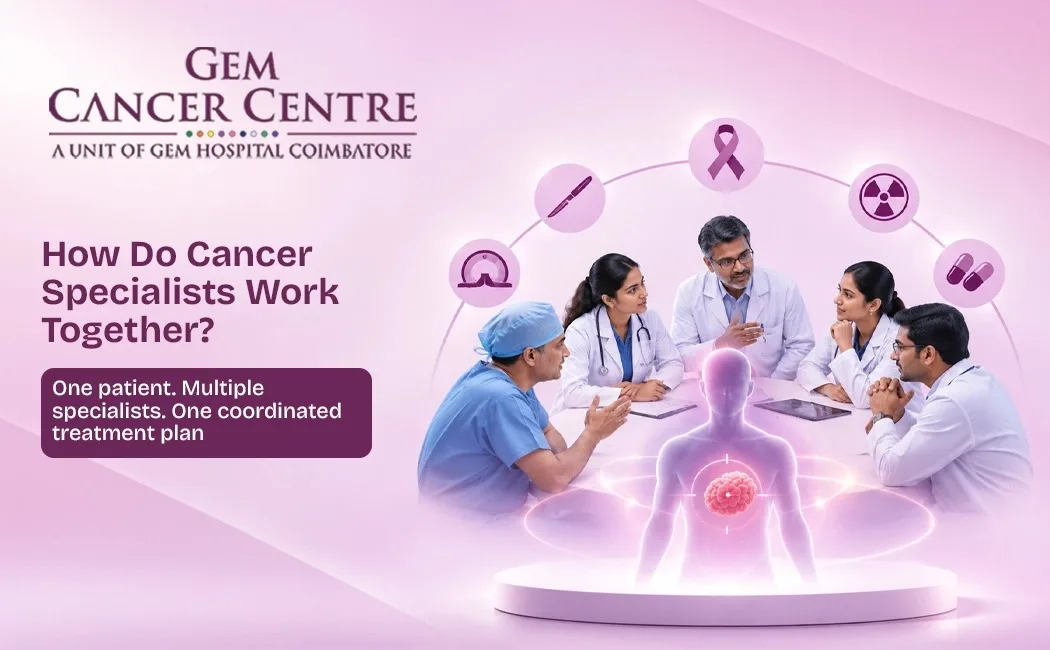
At a Cancer Hospital in Coimbatore, specialists from medical oncology, surgical oncology, radiation oncology, pathology, radiology and nuclear medicine can work together to understand a patient's diagnosis and develop an appropriate treatment strategy.
At GEM Cancer Centre, a multidisciplinary team brings together different oncology and diagnostic specialties to support coordinated treatment planning. This approach allows doctors to consider the patient's cancer, test results, overall health and treatment goals before deciding on the next step.
For patients and families, understanding how this process works can make cancer treatment decisions easier to understand.
Why Do Cancer Patients Need More Than One Specialist?
Cancer can require different types of treatment, and each specialist contributes expertise in a specific area of care.
A surgeon may assess whether a tumour can be removed safely.
A medical oncologist may determine whether chemotherapy, immunotherapy, targeted therapy or hormone therapy has a role.
A radiation oncologist may evaluate whether radiation treatment is appropriate.
A pathologist helps establish the exact nature of the cancer, while radiologists and nuclear medicine specialists provide important information from imaging.
These specialists do not necessarily work independently.
They can review the same patient's case and combine their perspectives before a treatment plan is finalised.
This coordinated approach can be particularly valuable for patients seeking Cancer Treatment in Coimbatore, where complex cases may require several treatment modalities.
What Is a Multidisciplinary Tumour Board?
A multidisciplinary tumour board is a group of cancer specialists who review a patient's case together and discuss appropriate treatment options.
The specialists involved can vary depending on the type of cancer and the patient's specific needs.
A tumour board may include:
Medical oncologists
Surgical oncologists
Radiation oncologists
Radiologists
Onco-pathologists
Nuclear medicine specialists
Oncology nurses
Nutrition professionals
Rehabilitation specialists
Supportive-care professionals
The purpose is not simply to involve more doctors.
It is to bring together different areas of expertise so that the patient's diagnosis, stage, treatment options and overall health are considered together.
For a patient, this can create a more coordinated and understandable treatment pathway.
How Is a Patient's Cancer Case Reviewed?
The cancer team reviews pathology, imaging, staging information and the patient's overall health before recommending treatment.
A multidisciplinary review may consider several types of information.
Biopsy and Pathology
A biopsy helps establish whether cancer is present and identifies the type of cancer.
The pathology report may also provide information about tumour characteristics that can influence treatment.
Imaging
Depending on the cancer, specialists may review:
CT scans
MRI scans
PET-CT scans
Ultrasound
Mammograms
Other specialised imaging
Cancer Stage
The team needs to understand whether the cancer is localised, locally advanced or has spread to distant areas.
Medical History
Existing medical conditions, previous treatments, medications and general health can influence treatment choices.
Patient Preferences
The patient's concerns, priorities and treatment goals are also important parts of the discussion.
What Does a Medical Oncologist Do?
A medical oncologist manages treatments that work throughout the body.
Depending on the cancer, a medical oncologist may consider:
Chemotherapy
Immunotherapy
Targeted therapy
Hormone therapy
Other systemic treatments
The oncologist considers the cancer type and stage along with relevant pathology and molecular information.
Systemic treatment may sometimes be given before surgery to reduce disease or after surgery to address microscopic cancer cells.
In advanced cancer, systemic treatment can also be an important part of controlling disease and managing symptoms.
This makes medical oncology a central component of multidisciplinary cancer care.
What Does a Surgical Oncologist Do?
A surgical oncologist evaluates whether surgery can safely remove the cancer and determines what type of operation may be appropriate.
For many solid tumours, surgery can play an important role.
The surgical oncologist considers:
Tumour size
Tumour location
Involvement of nearby structures
Lymph-node involvement
Whether the disease has spread
Overall patient health
Depending on the cancer and individual circumstances, surgery may be open, laparoscopic or robotic.
The aim is not simply to remove a visible tumour. The surgeon also considers safe margins, nearby structures, functional outcomes and the patient's overall treatment plan.
What Does a Radiation Oncologist Contribute?
A radiation oncologist determines whether radiation therapy has a role and develops the appropriate radiation treatment plan.
Radiation therapy may be used:
Before surgery
After surgery
Alongside chemotherapy
As the primary treatment for selected cancers
To control symptoms in advanced disease
Modern radiation treatment uses detailed imaging and treatment planning to target the intended area while limiting unnecessary exposure to surrounding tissues.
The radiation oncologist therefore needs to understand the tumour's location, stage and relationship with nearby organs.
This is another reason multidisciplinary discussion is important when planning Cancer Treatment in Coimbatore.
Why Is Pathology Important in Cancer Treatment Planning?
Pathology helps doctors understand exactly what type of cancer is present and what characteristics it has.
A scan can show an abnormal mass, but tissue examination provides information about the cancer at a cellular level.
Pathology may help determine:
Cancer type
Tumour grade
Cellular characteristics
Biomarker status
Molecular features
In selected cancers, additional molecular testing may help identify patients who could benefit from targeted treatments or immunotherapy.
This information can significantly influence the treatment plan.
How Does Imaging Help the Cancer Team?
Imaging helps specialists understand where the cancer is located and whether it has spread.
Different scans provide different types of information.
CT can provide detailed anatomical information.
MRI can provide detailed images of particular organs and tissues.
PET-CT can provide information about both anatomy and metabolic activity in selected cancers.
For example, the GEM Cancer Centre article on how PET-CT helps doctors plan cancer treatment explains how PET-CT can contribute to staging, treatment planning and assessment of treatment response.
PET-CT is not required for every cancer patient. Its usefulness depends on the cancer type, stage and specific clinical question.
How Does the Team Decide Which Treatment Comes First?
The treatment sequence depends on the cancer type, stage, tumour characteristics and the patient's overall condition.
There is no universal treatment sequence that applies to every cancer patient.
For example, one patient may undergo surgery first.
Another patient may receive chemotherapy or radiation before surgery.
A patient with advanced disease may require systemic treatment as the primary approach.
The team considers the potential benefits and risks of each option before deciding on the sequence.
This is one of the main advantages of multidisciplinary care: specialists can discuss not only what treatment is needed, but also when it should be given.
What Is Personalised Cancer Treatment?
Personalised cancer treatment means adapting evidence-based treatment to the individual patient and their cancer.
Personalised care may consider:
Cancer type
Cancer stage
Tumour location
Pathology findings
Molecular characteristics
Patient's age
Overall health
Previous treatments
Treatment response
Personal preferences
This does not mean that every patient receives an experimental treatment.
Instead, doctors use established cancer treatments while selecting the most appropriate combination and sequence for that individual.
For patients exploring Cancer Treatment in Coimbatore, asking how treatment is personalised can be an important part of the consultation.
Can the Cancer Treatment Plan Change?
Yes. A treatment plan can be modified when new information becomes available or when the cancer responds differently than expected.
Cancer care is an ongoing process.
Doctors may reassess the patient after:
Surgery
Chemotherapy
Radiation therapy
Immunotherapy
Targeted therapy
Follow-up imaging
If scans show a different response, pathology provides new information or side effects become difficult to manage, the team may reconsider the next stage of treatment.
This ongoing assessment helps keep treatment responsive to the patient's changing needs.
Why Is Communication Between Specialists Important?
Good communication helps ensure that different specialists are working toward the same treatment goals.
Cancer treatment can involve multiple appointments, tests and procedures.
Without coordination, patients may find the process confusing.
Multidisciplinary communication allows specialists to discuss:
Diagnosis
Stage
Treatment options
Surgical feasibility
Radiation requirements
Drug treatments
Test results
Treatment response
Follow-up care
This can help give patients a clearer understanding of their treatment pathway.
Does Every Cancer Patient Need a Multidisciplinary Team?
The level of multidisciplinary involvement depends on the type and complexity of the cancer.
Some cancers may require only a limited number of specialists.
Others may require input from several disciplines.
Complex cancers, locally advanced cancers and cancers requiring combinations of surgery, radiation and systemic therapy can particularly benefit from coordinated specialist review.
When choosing a Cancer Hospital in Coimbatore, patients can ask how their case will be reviewed and which specialists will be involved.
Can a Second Opinion Be Part of Cancer Care?
Yes. A second opinion can help patients better understand their diagnosis and treatment options.
A second opinion may be useful when:
The diagnosis is complex
Major surgery has been recommended
Several treatment options are available
The cancer has returned
The disease is advanced
The patient wants confirmation before starting treatment
Seeking a second opinion does not necessarily mean changing doctors.
It can provide another professional perspective and help a patient feel more confident about an important treatment decision.
Patients can also explore the oncology specialists at GEM Cancer Centre to understand the different areas of specialist expertise available.
What Should Patients Ask Their Cancer Specialists?
Patients should understand their diagnosis, treatment goal and the reason each treatment has been recommended.
Useful questions include:
What type of cancer do I have?
What is my exact stage?
Has the cancer spread?
What is the goal of treatment?
Why is this treatment being recommended first?
Do I need surgery?
Will I need chemotherapy?
Will I need radiation therapy?
Could immunotherapy or targeted therapy be appropriate?
Do I need molecular or biomarker testing?
How will we know if treatment is working?
What side effects should I expect?
Will my case be discussed by a multidisciplinary tumour board?
Would a second opinion be useful?
Writing these questions down before an appointment can make the consultation more productive.
What Should You Look for in a Cancer Hospital in Coimbatore?
Look for coordinated specialist care, appropriate diagnostic facilities and a treatment approach that considers the whole patient.
When comparing a Cancer Hospital in Coimbatore, patients can consider whether the centre provides:
Medical oncology
Surgical oncology
Radiation oncology
Pathology
Advanced imaging
Nuclear medicine
PET-CT
Molecular diagnostics
Multidisciplinary treatment planning
Nutrition support
Rehabilitation
Pain and supportive care
Follow-up services
GEM Cancer Centre brings together medical, surgical and radiation oncology along with onco-pathology, nuclear medicine, imaging and supportive-care services.
Patients can also explore the centre's clinical oncology services to understand how diagnosis, treatment planning and therapies such as chemotherapy, radiation, immunotherapy and targeted treatment can fit into cancer care.
How Does Multidisciplinary Care Benefit Patients?
Multidisciplinary care brings different areas of specialist expertise into one coordinated treatment process.
More Complete Case Review
Different specialists can contribute their expertise to the same case.
Better Treatment Coordination
Surgery, chemotherapy and radiation can be planned as part of one overall strategy.
More Informed Decisions
The team can compare different treatment options before recommending a pathway.
Personalised Planning
Treatment can be adapted to the patient's cancer characteristics and overall health.
Ongoing Reassessment
The plan can be reviewed as the patient's condition changes.
The purpose is not to promise a particular outcome. It is to create a structured process for making informed cancer-care decisions.
Frequently Asked Questions
What is a multidisciplinary cancer team?
A multidisciplinary cancer team is a group of specialists from different medical fields who work together to evaluate a patient's cancer and plan appropriate treatment.
What is a tumour board?
A tumour board is a structured discussion where cancer specialists review a patient's diagnosis, imaging, pathology and treatment options together.
Who is involved in cancer treatment planning?
Medical oncologists, surgical oncologists, radiation oncologists, pathologists, radiologists and other specialists may contribute depending on the patient's cancer.
Why do cancer specialists work together?
Different specialists have expertise in different areas of cancer care. Working together allows the team to consider surgery, systemic treatment, radiation, pathology and imaging as part of one treatment strategy.
Can a PET-CT affect cancer treatment decisions?
Yes. PET-CT findings can contribute to cancer staging and treatment planning in selected cancers. The results are interpreted alongside pathology, other imaging and clinical information.
Does every cancer patient need chemotherapy?
No. The need for chemotherapy depends on the cancer type, stage, tumour characteristics and overall treatment plan.
When is radiation therapy used for cancer?
Radiation therapy may be used before surgery, after surgery, with other treatments or as the primary treatment for selected cancers. Its role depends on the individual diagnosis.
Can cancer treatment change after it starts?
Yes. Doctors may adjust treatment based on treatment response, new test results, side effects or changes in the disease.
Should I get a second opinion before cancer treatment?
A second opinion can be helpful for complex diagnoses or major treatment decisions. It can provide additional information and confidence before treatment begins.
How do I choose a Cancer Hospital in Coimbatore?
Look for multidisciplinary specialist expertise, appropriate diagnostic facilities, coordinated treatment planning and supportive care. Ask how specialists work together to develop your treatment plan.
Conclusion
Cancer treatment is rarely a decision made by one doctor alone.
A multidisciplinary cancer team brings together medical oncology, surgical oncology, radiation oncology, pathology, radiology, nuclear medicine and supportive-care expertise to build a clearer picture of the patient's condition.
The medical oncologist may consider systemic treatments. The surgical oncologist assesses whether the tumour can be safely removed. The radiation oncologist evaluates the role of radiation. Pathologists provide essential information about the cancer itself, while imaging specialists help determine its location and extent.
For patients searching for a Cancer Hospital in Coimbatore, understanding this collaborative process can help them ask better questions and participate more confidently in treatment decisions.
GEM Cancer Centre's multidisciplinary approach brings together specialist cancer care and diagnostic services to support personalised treatment planning.
Ultimately, the goal of multidisciplinary cancer care is not simply to involve more doctors. It is to bring the right expertise together at the right stage of treatment, while keeping the patient's diagnosis, health, preferences and quality of life at the centre of the decision-making process.
If you or a loved one has been diagnosed with cancer, take your biopsy, pathology reports, scans and previous treatment records to your oncology consultation.
When choosing a Cancer Hospital in Coimbatore, ask whether your case will be reviewed by the relevant specialists and how the team will coordinate surgery, chemotherapy, radiation or other treatments.
You can also discuss whether a second opinion would be useful before making a major treatment decision.
Understanding who is involved in your cancer care - and why - can make the treatment journey clearer and more informed.